


 yueyang@yueyangcz.com

What is the difference between ringlock and cuplock scaffolding
 Oct 20, 2025|
 View:848
1. Introduction
Scaffolding systems are indispensable in construction, enabling workers to access elevated areas safely and efficiently. Among the numerous scaffolding types available, ringlock scaffolding and cuplock scaffolding stand out as two of the most widely used modular systems. Both offer distinct advantages in terms of assembly speed, load-bearing capacity, and adaptability. However, their structural designs, components, and applications differ significantly. This article explores the key characteristics of each system, compares their strengths and weaknesses, and provides insights into which option may be more suitable for specific projects.
2.What is Ringlock Scaffolding?
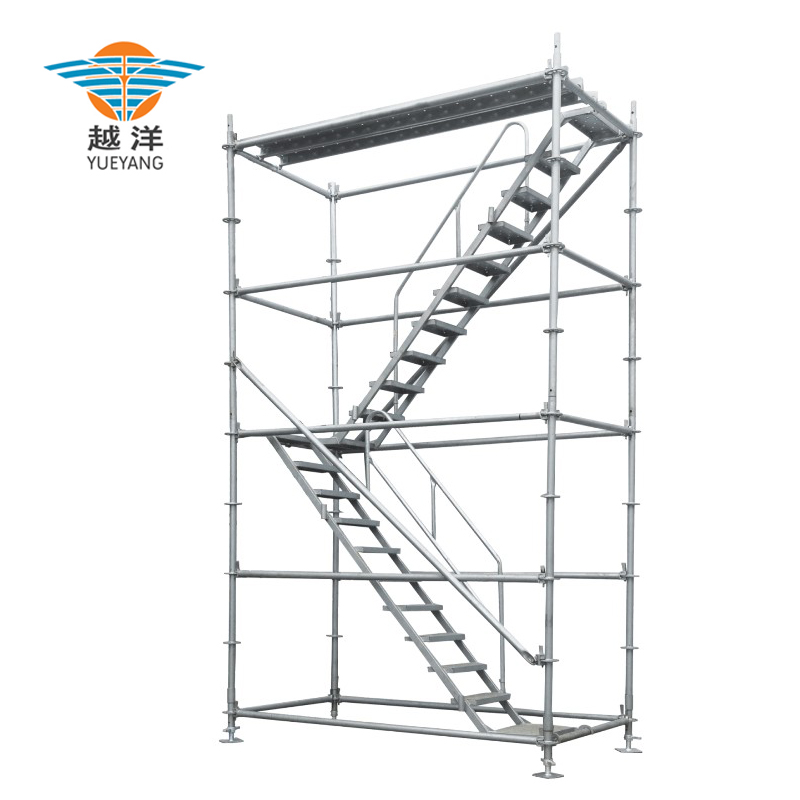
Ringlock scaffolding, also known as ringlock system or rosette scaffolding, is a highly versatile modular framework. Its defining feature is the rosette-shaped connector at the center of each vertical standard (upright pole). This connector has eight pre-engineered holes, allowing horizontal and diagonal braces to be inserted at 45° or 90° angles. The system uses a single wedge or locking pin to secure all connections, eliminating the need for multiple nuts and bolts.
Key Features of Ringlock Scaffolding:
Modularity: The rosette design enables rapid assembly and disassembly, as components can be added or removed without dismantling entire sections.
High Load Capacity: Ringlock systems are engineered to withstand heavy loads, making them ideal for industrial projects, bridges, and high-rise buildings.
Flexibility:The 360° rotational capability of the rosette allows for multi-directional connections, accommodating complex geometries.
Safety:Fewer components reduce the risk of loose parts, while the wedge-locking mechanism ensures stability.
3.What is Cuplock Scaffolding?
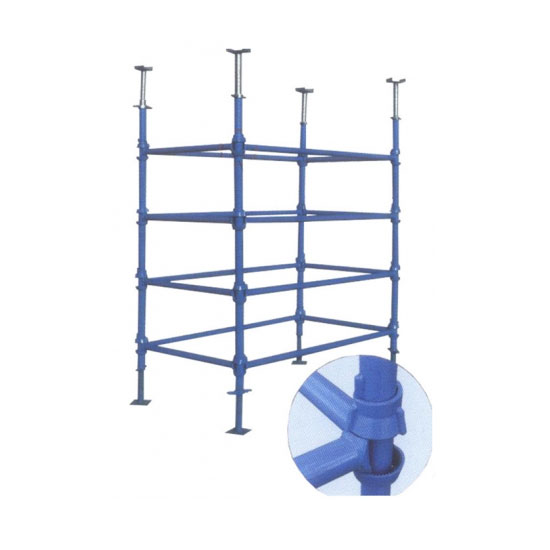
Cuplock scaffolding, named after its cup-shaped connectors, is another popular modular system. It consists of vertical standards with fixed "cowsfoot" brackets at regular intervals and horizontal ledgers that snap into place via a rotating cup mechanism. The system relies on gravity and friction to hold components together, with a locking pin preventing accidental dislodgement.
Key Features of Cuplock Scaffolding:
Speed of Assembly: The cup-and-ledge design allows for quick vertical and horizontal connections, reducing labor time.
Cost-Effectiveness: Fewer components and simpler engineering make cuplock scaffolding more affordable for small to medium-scale projects.
Standardization: Components are interchangeable, simplifying inventory management and repairs.
Lightweight: While less robust than ringlock, cuplock is easier to transport and handle, making it suitable for residential or low-rise construction.
4.Differences Between Ringlock and Cuplock Scaffolding
Connector Design and Mechanism
Ringlock Scaffolding: Features a rosette-shaped connector at the center of vertical standards, with eight pre-engineered holes. These holes allow horizontal and diagonal braces to be inserted at precise angles (45° or 90°), secured by a single wedge or locking pin. This multi-directional capability enables complex structural configurations.
Cuplock Scaffolding:Uses fixed cup-shaped connectors on vertical standards, paired with "cowsfoot" brackets. Horizontal ledgers snap into the cups via a rotating mechanism, relying on gravity and friction for stability. A locking pin prevents accidental dislodgement, but connections are limited to vertical and horizontal directions.
Assembly Speed and Efficiency
Ringlock Scaffolding: Assembly requires careful alignment of braces with the rosette holes, which can slow initial setup. However, its modularity allows for rapid adjustments and expansions without dismantling entire sections.
Cuplock Scaffolding: Designed for speed, the snap-in cup-and-ledge system enables quicker vertical and horizontal connections. Workers can erect frameworks faster, making it ideal for time-sensitive projects.
Load Capacity and Structural Robustness
Ringlock Scaffolding: Engineered for heavy-duty applications, it supports significantly higher loads due to its rigid wedge-locking mechanism and multi-directional bracing. This makes it suitable for industrial projects, high-rise buildings, and bridges.
Cuplock Scaffolding: Offers moderate load capacity, best suited for light to medium-duty tasks like residential construction, interior renovations, or single-story structures. Overloading can compromise stability.
Flexibility and Adaptability
Ringlock Scaffolding: The 360° rotational rosette allows for complex geometries, including curved or irregular shapes. It adapts easily to non-standard designs, such as domes or angular facades.
Cuplock Scaffolding:Primarily designed for rectangular or square frameworks, its flexibility is limited. Adjustments to non-linear shapes require additional components or modifications.
Component Complexity and Inventory Management
Ringlock Scaffolding: Involves more components (rosettes, wedges, braces, and standards), increasing initial complexity. However, its modularity reduces long-term inventory needs, as parts are interchangeable across projects.
Cuplock Scaffolding:Uses fewer components (cups, ledgers, and standards), simplifying inventory management. Standardization reduces the risk of missing parts but offers less adaptability.
Cost Considerations
Ringlock Scaffolding: Higher upfront costs due to advanced engineering and durable materials. Long-term savings come from its reusability and adaptability, reducing the need for frequent replacements.
Cuplock Scaffolding: More affordable initially, making it attractive for budget-conscious projects. However, its limited load capacity and flexibility may lead to higher costs in complex or large-scale scenarios.
Safety and Stability
Ringlock Scaffolding: The wedge-locking mechanism ensures secure connections, minimizing the risk of structural failure. Fewer loose parts enhance on-site safety.
Cuplock Scaffolding: Relies on friction and gravity, which can be less reliable under heavy loads or dynamic conditions. Regular inspections are crucial to maintain stability.
Summary of Key Differences
Ringlock scaffolding prioritizes strength, adaptability, and long-term durability, making it ideal for demanding projects.
Cuplock scaffolding emphasizes speed, simplicity, and cost-effectiveness, suited for smaller or less complex tasks.
Understanding these differences ensures contractors select the most appropriate system for their needs, balancing performance, safety, and budget.
5.Which is Better: Ringlock or Cuplock Scaffolding?
The choice between ringlock scaffolding and cuplock scaffolding depends on project requirements:
Choose Ringlock Scaffolding If:
The project involves heavy loads, irregular shapes, or high-rise structures.
Long-term durability and safety are critical.
Budget allows for a higher initial investment.
Choose Cuplock Scaffolding If:
The project is small-scale, such as residential buildings or interior renovations.
Speed of assembly and cost savings are priorities.
The structure follows a simple rectangular layout.
For example, a bridge construction project would benefit from ringlock scaffolding due to its strength and adaptability, while a single-story warehouse might opt for cuplock scaffolding to reduce costs.
Need Custom Scaffolding & Construction Equipment Solutions For Your Projects?
Changzhou Yueyang Machinery specializes in full-range Ringlock Scaffolding, Frame Scaffolding, Formwork, Safety Barrier & Accessory systems for construction, stage event, mining and heavy industry. ISO 9001 certified, comply with EU EN & Australia AS/NZ safety standards. Factory direct one-stop service from drawing customization to full container delivery.
Conclusion
Both ringlock scaffolding and cuplock scaffolding offer unique advantages in construction. Ringlock systems excel in versatility and load-bearing capacity, making them ideal for complex or heavy-duty projects. In contrast, cuplock scaffolding provides a cost-effective and rapid solution for simpler tasks. Ultimately, the decision hinges on project scope, budget, and safety requirements. By understanding the differences between these two systems, contractors can select the most efficient and reliable scaffolding for their needs, ensuring both productivity and worker safety.
In the evolving landscape of construction technology, ringlock scaffolding and cuplock scaffolding continue to play vital roles, each catering to distinct segments of the industry. Whether prioritizing strength or affordability, the right choice will always depend on the specific demands of the job at hand.