

 yueyang@yueyangcz.com

When can concrete formwork be removed
 Dec 22, 2025|
 View:5170
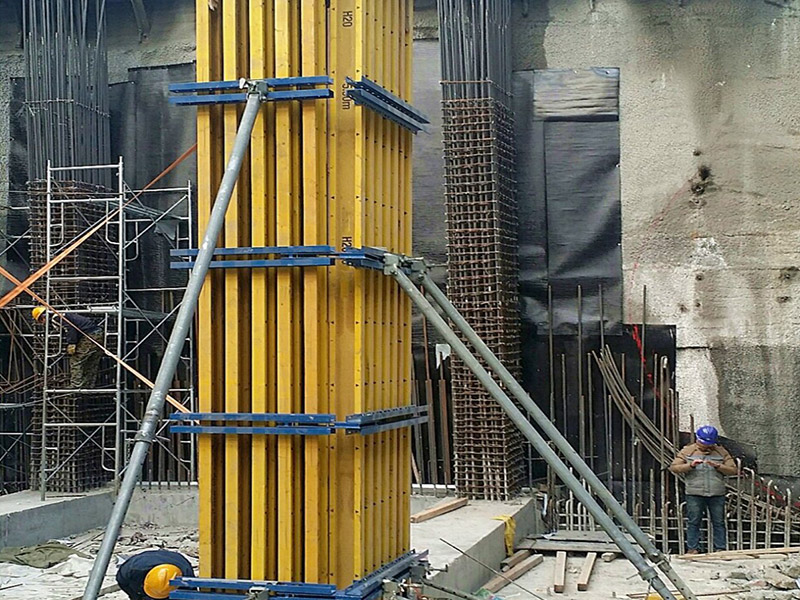
The removal of concrete formwork, also known as deshuttering or striking off, is a critical phase in construction that directly impacts structural integrity, safety, and project efficiency. Timing this process incorrectly—whether prematurely or excessively delayed—can lead to concrete cracking, deformation, or even collapse. This article explores the scientific principles, industry standards, and practical considerations governing concrete formwork removal, providing engineers and contractors with actionable guidelines.
The Science Behind Formwork Removal Timing
Concrete gains strength through hydration, a chemical reaction between cement and water that progresses over time. The rate of strength development depends on factors such as cement type, ambient temperature, humidity, and concrete mix design. For example, high-early-strength cement (e.g., OPC 53) achieves 50% of its design strength within 24 hours, whereas ordinary Portland cement (OPC 43) may require 48–72 hours under similar conditions.
A fundamental rule for formwork removal is ensuring the concrete has attained at least twice the stress it will experience after deshuttering. This principle, rooted in stress-ratio analysis, prevents structural failure by accounting for dynamic loads during construction. For instance, a slab spanning 6 meters must develop sufficient flexural strength to resist bending moments caused by its self-weight and temporary construction loads.
Industry Standards and Guidelines
Global construction standards provide specific timelines for formwork removal, tailored to structural elements and environmental conditions:
1.Vertical Elements (Walls, Columns, Beams)
IS 456:2000 (India): Vertical formwork can be removed after 16–24 hours if the concrete has achieved initial set and can resist adhesion forces.
ACI 347 (USA): Similar guidelines recommend 12–24 hours for walls and columns, assuming normal curing temperatures (20–30°C).
BS 8110 (UK): Emphasizes visual inspection—formwork may be removed when the concrete has hardened sufficiently to avoid surface damage.
2.Horizontal Elements (Slabs, Beams)
Slabs:
IS 456: 7 days for spans up to 4.5 meters, extending to 14 days for longer spans.
ACI 347: 3–4 days for standard slabs, with props retained for 7 days under heavy loads.
Beams:
IS 456: 7 days for soffit props, increasing to 14 days for beams spanning over 6 meters.
ACI 347: 7–10 days for beam soffits, with longer durations for high-stress scenarios.
3.Special Structures (Arches, Cantilevers)
IS 456 mandates 28 days for cantilevered elements, while arches require props for 14–21 days to prevent deflection.
ACI 347 aligns with these timelines, stressing the need for structural stability during deshuttering.
Key Factors Influencing Removal Timing
1.Cement Type and Admixtures
High-early-strength cement or chemical admixtures (e.g., triethanolamine-based accelerators) can reduce formwork removal time by 30–50%. For example, a 2025 study demonstrated that concrete mixed with high-fineness OPC and early Portland cement achieved 5 MPa strength in 12 hours, compared to 24 hours for standard mixes.
2.Ambient Conditions
Temperature: Curing accelerates in warm climates (≥25°C) and slows in cold weather (<10°C). In winter, formwork may need to remain in place 50% longer than in summer.
Humidity: Low humidity increases evaporation, risking surface cracking. Wet hessian or polythene coverings are recommended post-deshuttering to retain moisture.
3.Load Requirements
Structural elements subjected to bending loads (e.g., slabs) require longer curing than vertical elements. For example, a 6-meter slab under construction load must develop 70% of its design strength before props are removed.
Best Practices for Safe Deshuttering
1.Testing and Inspection
Conduct non-destructive tests (e.g., rebound hammer, ultrasonic pulse velocity) to verify concrete strength.
Inspect for surface defects like honeycombing or voids, which may necessitate patching before deshuttering.
2.Sequential Removal
Start with corners and edges to minimize stress concentrations.
Use flat pry bars to gently loosen forms, avoiding impact damage.
3.Post-Removal Care
Cover exposed surfaces with wet hessian or polythene for 5–7 days to ensure full hydration.
Monitor for deflection or cracking, especially in flexural members.
Need Custom Scaffolding & Construction Equipment Solutions For Your Projects?
Changzhou Yueyang Machinery specializes in full-range Ringlock Scaffolding, Frame Scaffolding, Formwork, Safety Barrier & Accessory systems for construction, stage event, mining and heavy industry. ISO 9001 certified, comply with EU EN & Australia AS/NZ safety standards. Factory direct one-stop service from drawing customization to full container delivery.
Conclusion: The Critical Role of Concrete Formwork Management
Concrete formwork removal is a nuanced process that demands adherence to scientific principles, industry standards, and environmental considerations. Premature deshuttering risks structural failure, while delays can hinder project timelines and increase costs. By leveraging high-early-strength cement, optimizing mix designs, and conducting rigorous strength testing, engineers can safely accelerate formwork removal without compromising quality. Ultimately, the judicious management of concrete formwork—from installation to deshuttering—is indispensable for achieving durable, safe, and efficient construction outcomes. As the industry evolves, advancements in materials science and real-time monitoring technologies will further refine these practices, ensuring that concrete formwork remains a cornerstone of modern structural engineering.