

 yueyang@yueyangcz.com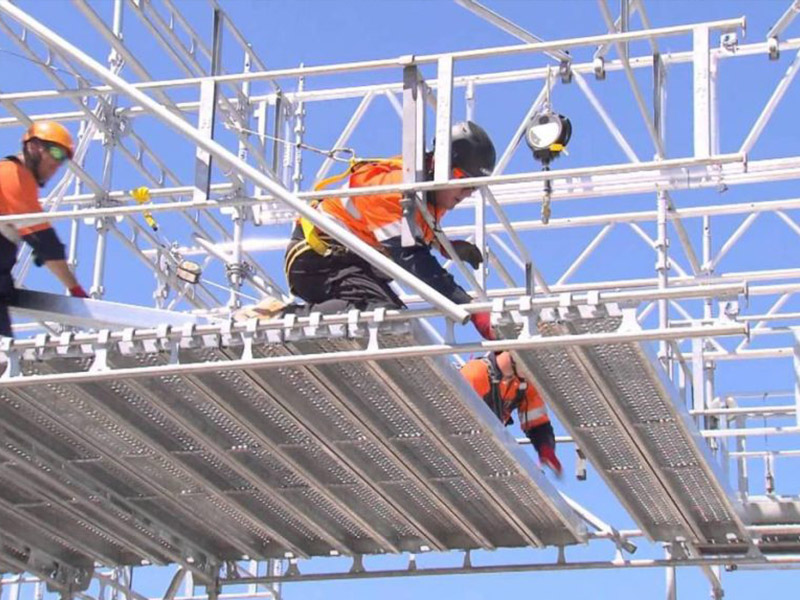
Ringlock Scaffolding vs Tube and Coupler Scaffolding: Key Differences Explained
 Sep 30, 2026|
 View:7
Choosing between ringlock scaffolding and tube and coupler begins with one defining difference. Ringlock is a modular, wedge-locked system built for speed and predictability. Tube and coupler is a flexible, clamp-based system built for custom shapes.
The right choice depends on project scale, geometry, timeline, labor skill, and budget. A large high-rise job rewards repetition and quick assembly. A tank repair or steel structure demands adaptability and experienced crews.
Before reading further, identify your project type. Does it use repetitive layouts with clear access paths? Or does it wind around irregular equipment and curved surfaces? Your answer will guide every comparison below.
Key Takeaways
Ringlock scaffolding assembles 30-50% faster than tube and coupler, saving time and labor costs.
Ringlock provides over 15% higher load capacity, making it ideal for heavy-duty projects.
Tube and coupler scaffolding adapts to complex shapes, perfect for irregular structures.
Choose ringlock for large, repetitive jobs; choose tube and coupler for custom, complex work.
Both systems meet safety standards, but ringlock reduces human error with its locking mechanism.
What Is Ringlock Scaffolding?
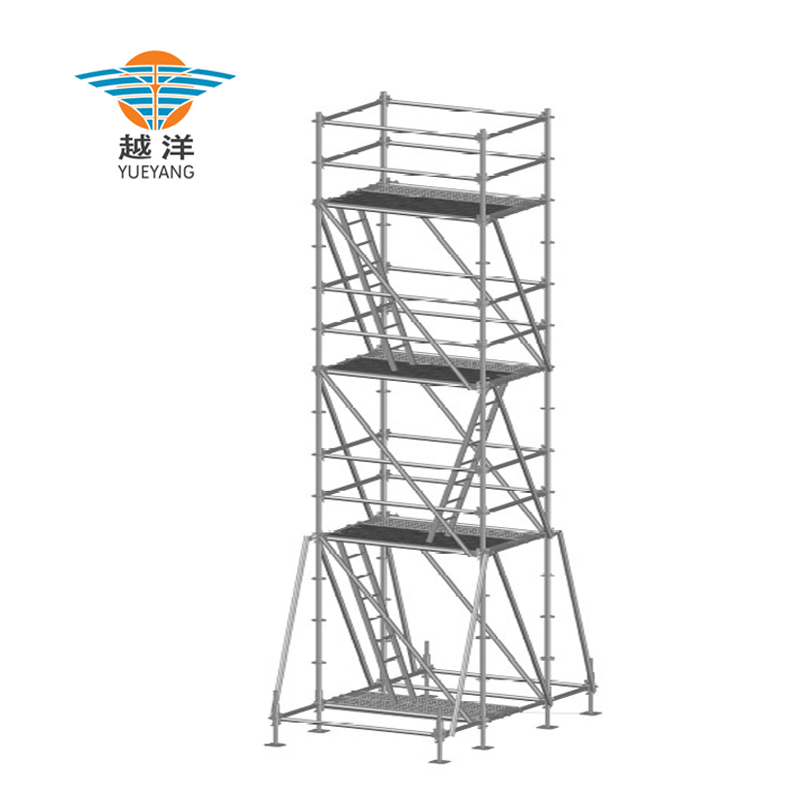
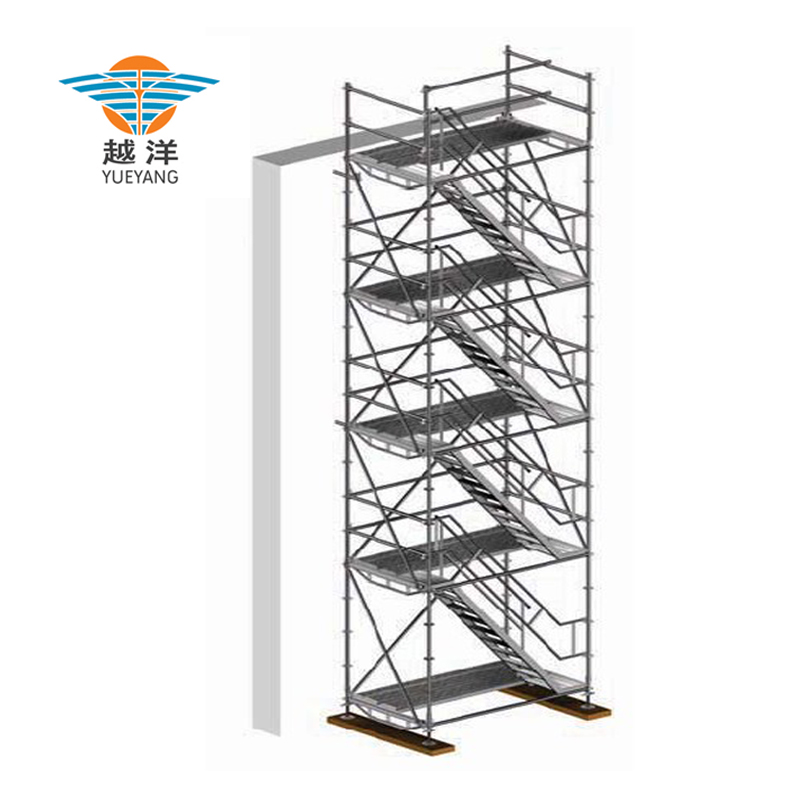
Ringlock scaffolding is a modular access system built around vertical standards fitted with welded rosette nodes. These nodes serve as the primary connection points for all horizontal and diagonal members. The design eliminates loose bolts and fasteners, which speeds up assembly and reduces the risk of dropped hardware on site.
How the Rosette and Wedge System Works
Each rosette is a circular steel plate welded to the standard at fixed intervals. The rosette features eight openings that accept ledger and brace heads from multiple directions. Workers insert the wedge head into the rosette, then strike the wedge pin with a hammer to lock the connection. This positive locking action creates a firm mechanical joint without additional tools or loose parts.
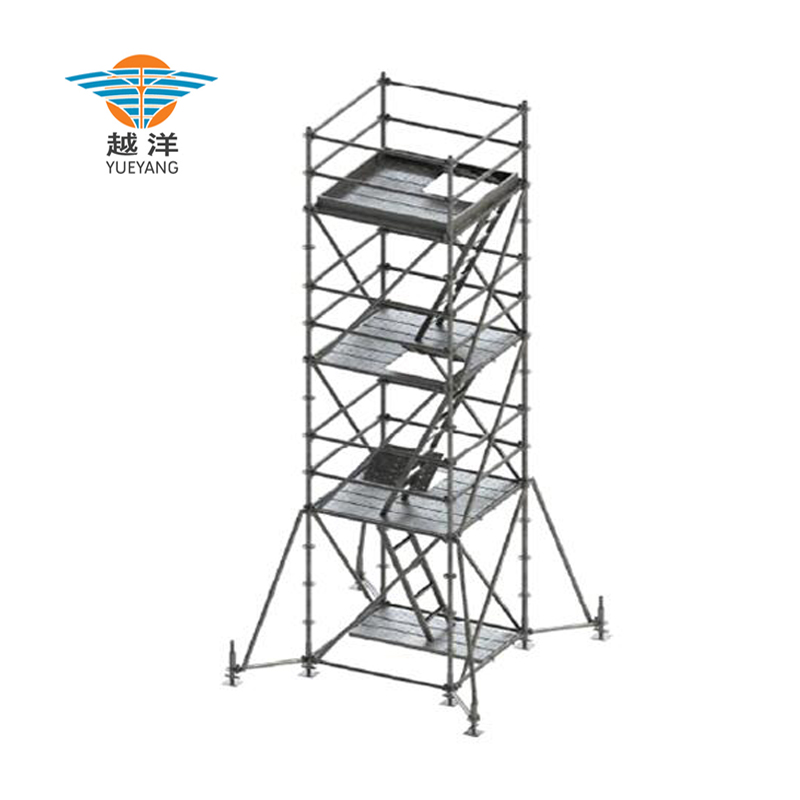
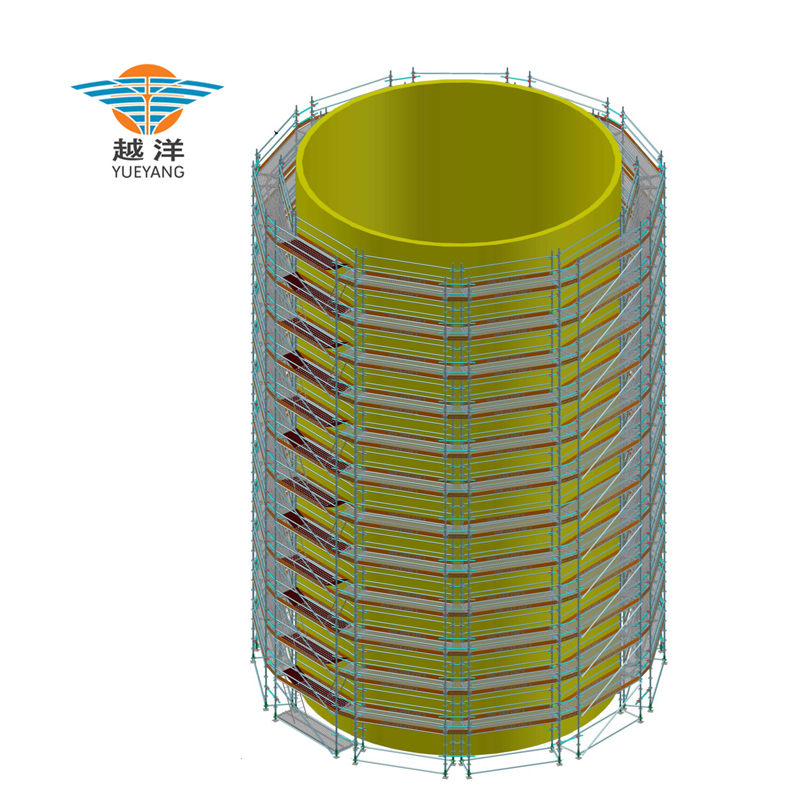
The uniform ring spacing along the standard allows ledgers and diagonal braces to connect at any height. This flexibility supports straight runs, curved facades, towers, and stair towers with minimal component variety. A spigot at the top of each standard enables seamless vertical stacking and alignment.
Component | Common Sizes | Material |
|---|---|---|
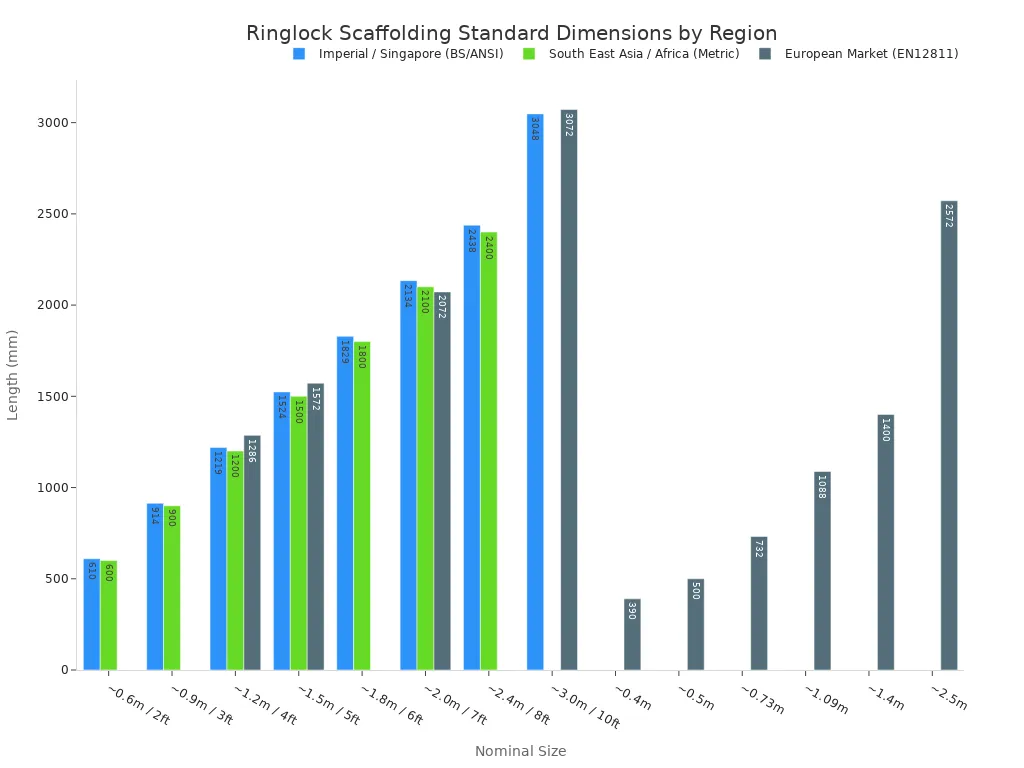
Vertical standards | 500 mm to 3000 mm lengths | Q355 steel |
Ledgers | 0.3 m to 2.5 m lengths | Q235 or Q345 steel |
Diagonal braces | 1 m to 3 m (customizable) | Q235 or Q345 steel |
Rosette | 120 mm diameter, 8–10 mm thick | Q235 or Q345 steel plate |
Where Ringlock Is Typically Used
Ringlock scaffolding suits projects that demand repetitive layouts and fast erection cycles. Construction sites with uniform floor heights benefit from the modular design. Industrial maintenance crews use it around boilers, tanks, and processing equipment. Bridge repair projects rely on its load-bearing capacity and stable platforms.
Shipyards and event staging companies also favor this system. The interchangeable components simplify inventory management across multiple job sites. Galvanized finishes provide corrosion resistance for outdoor and marine environments.
What Is Tube and Coupler Scaffolding?
Tube and coupler scaffolding is the oldest scaffold system still in widespread use. It consists of individual steel tubes joined by separate clamps called couplers. Every connection is made on site by a worker who positions each tube and tightens each clamp by hand.
The system includes vertical standards that carry the downward weight and form the backbone of the structure. Horizontal ledgers connect the vertical tubes to create a rigid frame and prevent swaying. Diagonal braces fixed across the framework resist twisting and add stability against wind. Base jacks provide adjustable height leveling on uneven ground, and base plates sit under vertical tubes to prevent sinking into soft soil. Planks made of steel or galvanized board create the working platform, while toe boards stop tools and materials from sliding off the edge.
How Tubes and Couplers Connect
Couplers are the critical connection pieces. Each type serves a specific purpose, and selecting the right one requires judgment on site.
Coupler Type | Function |
|---|---|
Fixed (right-angle) coupler | Connects two tubes at a precise 90-degree angle for main load-bearing joints |
Swivel coupler | Connects two tubes at any required angle, used for diagonal braces and irregular structures |
Putlog coupler | Attaches a putlog or transom to a ledger to support the working platform |
Right-angle couplers handle the primary structural connections that keep uprights and ledgers rigid. Swivel couplers solve problems around uneven wall lines and bracing at odd angles. They are not intended for heavy loads. This system demands more on-site decision-making than modular alternatives. Skilled workers must judge spacing, clamp torque, and bracing placement as the scaffold rises.
Where Tube and Coupler Is Typically Used
This system excels around tanks, pipes, steelwork, and other irregular structures. Industrial maintenance crews face plant areas that rarely provide clean wall lines. Pipes, valves, tanks, ducts, cable trays, and steel beams interrupt access routes. Tube and clamp scaffolding offers freedom around unusual angles, tight spaces, and short returns.
Oil and gas projects use it for refinery, tank farm, and pipe rack access. Power plant maintenance benefits in awkward corners where fixed bay sizes leave gaps. Bridge and infrastructure work also relies on this system to reach under a deck, wrap around piers, or handle uneven ground. Crews can turn the structure around an obstacle, add a short lift, or tie into steelwork where standard modules would leave gaps.
Assembly Speed and Labor Efficiency
Ringlock's Modular, Tool-Light Assembly
Ringlock scaffolding assembles through a system of predefined connection points. Workers drop ledger heads into rosette nodes and strike a wedge pin with a hammer. No loose bolts, no separate clamps, and no time lost searching for hardware. This design eliminates most manual measuring and leveling on site.
The speed advantage is measurable. Ringlock scaffolding is reported to reduce installation time by 30%–50% compared with conventional methods. A crew can erect a full bay in minutes rather than hours. Moderate skill levels suffice because the rosette spacing sets the geometry automatically. New workers learn the wedge-lock action quickly, which shortens training cycles and reduces dependence on veteran scaffolders.
Scaffold Type | Assembly Speed | Worker Skill |
|---|---|---|
Ringlock | 30%–50% faster than conventional methods | Moderate; measuring and leveling largely eliminated |
Tube and Coupler | Slow; each coupler placed and tightened by hand | High; manual leveling and plumbing required |
Tube and Coupler's Slower, Skill-Heavy Assembly
Tube and coupler assembly moves one tube and one coupler at a time. A worker positions each tube, checks alignment, then tightens the clamp with a wrench. Every joint demands a decision about spacing, angle, and torque. The process is inherently slower than a modular system.
Skill requirements are high. Workers must manually level and plumb the structure as it rises. A misaligned tube at the base compounds with each lift. Experienced crews compensate through judgment and experience, but the learning curve is steep. Labor costs rise accordingly, and schedule risk grows on large projects. For repetitive work, this method consumes more man-hours per square meter of scaffold than a modular alternative.
Structural Integrity and Load Capacity
Ringlock's Engineered Node Connections
Ringlock scaffolding transfers loads through its rosette nodes rather than through friction or clamp pressure. Each rosette is welded directly to the vertical standard, which creates a continuous load path from the ledger to the ground. The wedge pin locks the ledger head into the rosette with a positive mechanical connection. This connection does not rely on torque or friction to hold its position.
The result is a structure with predictable strength. Ringlock scaffolding delivers more than 15% higher load capacity than tube and coupler systems. It also operates at higher kN/m² working load ratings. Engineers can specify the system for heavy-duty applications with confidence because the node points behave consistently under load. Diagonal braces at the same nodes add stiffness against wind and lateral forces without weakening the primary connections.
Tube and Coupler's Clamp-Dependent Strength
Tube and coupler scaffolding depends on clamp tightness for every structural connection. Each coupler must be tightened to the correct torque to develop its rated capacity. Standard safety protocols require tightening scaffolding coupler nuts to approximately 50 Nm. A properly tightened coupler achieves a slip resistance safe working load of 9.1 kN and a tension safe working load of 15.0 kN.
Incorrect torque directly affects structural safety. Over-tightening strips the threads and creates micro-cracks in the fastener. Under-tightening allows the diagonal brace to loosen, which encourages structural sway under wind loads. Heavy oil, paint, or excessive corrosion on the tube surface lowers the friction coefficient and reduces slip resistance even when torque is correct. These variables make the strength of a tube and coupler scaffold dependent on worker skill and site conditions, not just on the components themselves.
Parameter | Value / Effect |
|---|---|
Required installation torque | 50 Nm |
Slip resistance safe working load | 9.1 kN per coupler |
Tension safe working load | 15.0 kN per coupler |
Effect of over-tightening | Threads stretch past yield point, micro-cracks form, fastener damaged |
Effect of under-tightening | Diagonal brace loosens, structural sway under wind loads |
Condition reducing slip resistance | Heavy oil, paint, or excessive corrosion lowers friction coefficient |
Versatility and Flexibility
Ringlock's Limits with Irregular Geometry
Ringlock scaffolding performs best when the structure follows a predictable pattern. The rosette nodes sit at fixed intervals along each standard. Ledgers and braces connect at those points only. This design delivers speed and consistency on straight runs, towers, and curved facades. It struggles when the work area refuses to follow a grid.
Consider a plant room filled with offset pipes, valves, and cable trays. A standard bay may not fit between two obstacles. The modular frame cannot wrap around a protruding steel beam without leaving a gap. Workers can add tube and fitting attachments to bridge short distances. Large irregular zones still demand custom solutions that the base system cannot provide alone.
Tube and Coupler's Advantage on Complex Shapes
Tube and coupler scaffolding solves the problems that modular systems cannot. Swivel couplers connect two tubes at any required angle. Crews can turn a run around a tank, step a lift over a pipe rack, or tie into existing steelwork. No fixed node spacing limits the layout. Every connection is placed where the structure needs it.
This freedom matters in oil and gas, power generation, and bridge maintenance. Refinery and tank farm access often winds through dense equipment. A tube and clamp frame adapts to those conditions without special components. Workers can add a short return, brace an odd corner, or build around an obstruction. The trade-off is clear. This flexibility demands skilled labor and more time on site. For geometrically complex work, no modular alternative matches that level of adaptability.
Cost and Return on Investment
Upfront Costs vs. Long-Term Labor Savings
Ringlock scaffolding carries a higher upfront price than tube and coupler. The precision-engineered rosettes and forged end fittings cost more to manufacture than plain steel pipes and cast-iron clamps. A contractor buying new equipment will pay more per component for the modular system.
The long-term picture reverses that advantage. Ringlock cuts assembly time by 30%–50% compared with conventional methods. Labor represents the largest cost on any scaffold project. Where skilled scaffolders are scarce or expensive, modular systems drastically cut labor hours and offset the higher initial component cost. Tube and coupler demands very high skill levels to keep the structure plumb and level. That requirement drives up wages and extends schedules.
Factor | Ringlock Modular | Tube & Coupler |
|---|---|---|
Upfront Cost | Higher | Lower |
Assembly Speed | Very fast | Slow |
Labor Skill Required | Medium | Very high |
Long-Term Cost Efficiency | High | Low |
Rental, Transport, and Maintenance Considerations
Transport and storage costs favor the modular design. Ringlock components stack neatly and maximize shipping container space. This reduces truck requirements and logistics costs on every delivery. Tube and coupler bundles are bulkier and less efficient to move.
Maintenance tells a similar story. Galvanized finishes on ringlock scaffolding resist corrosion and extend service life. That durability lowers repair and replacement costs over time. Tube and coupler systems lose small couplers and bolts frequently. Each lost piece adds recurring expense. Interchangeable ringlock components simplify inventory management and maximize return on investment. Crews replace individual parts without sorting through mismatched stock. For large commercial, industrial, and infrastructure projects with high labor costs, the efficiency and safety gains produce superior ROI. Small-scale renovations in regions with exceptionally low labor costs may still favor the clamp-based approach.
Safety and Compliance
Inspection, Training, and Fall Protection Differences
Ringlock scaffolding uses a positive locking mechanism at every connection point. The wedge pin seats firmly into the rosette and cannot work loose from vibration or normal site movement. This design prevents accidental dislodging during use. Workers do not rely on friction or torque to hold critical joints together.
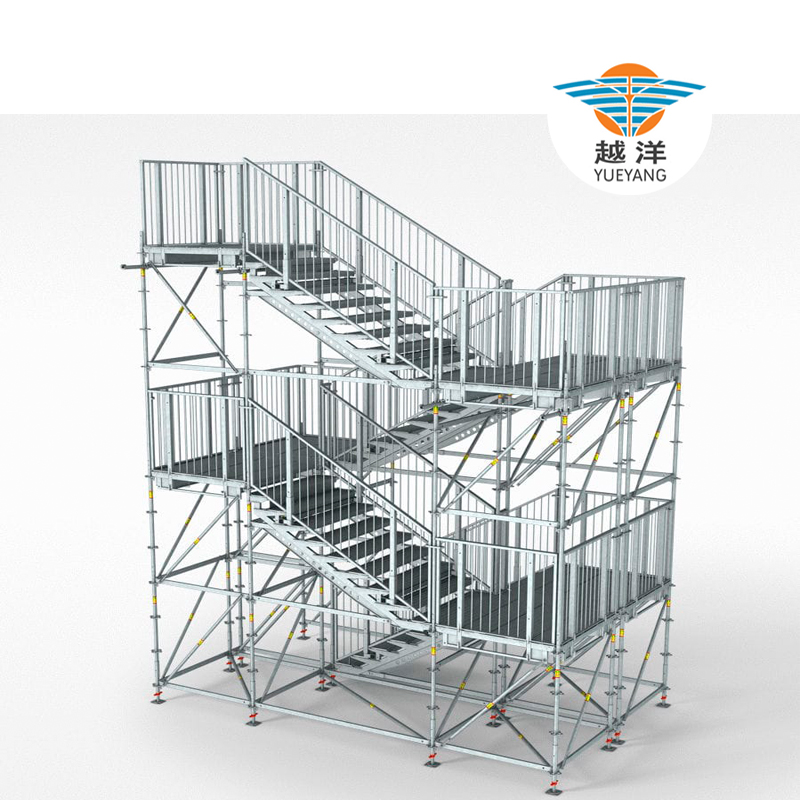
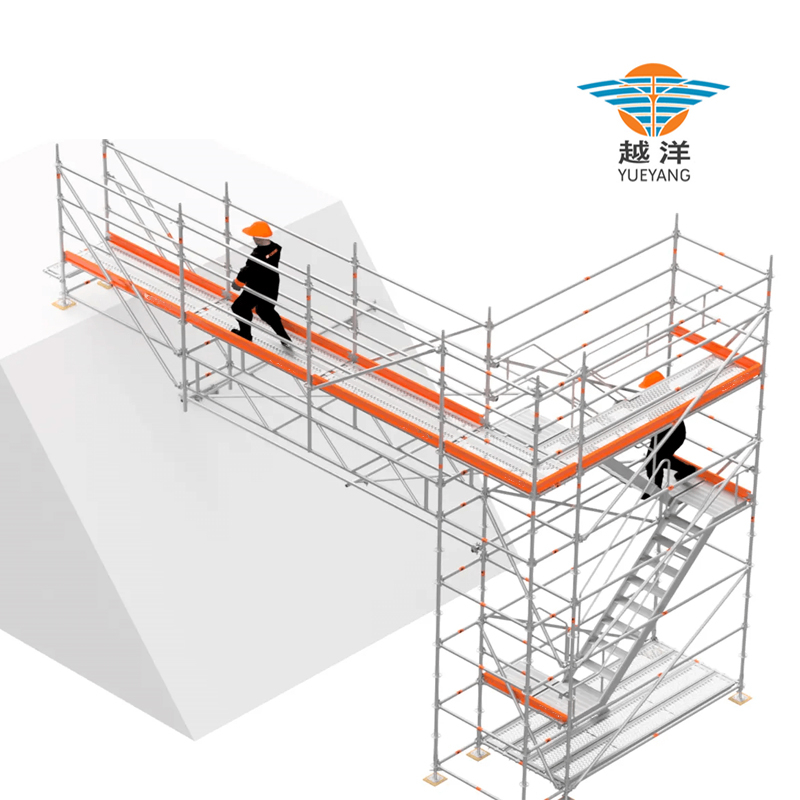
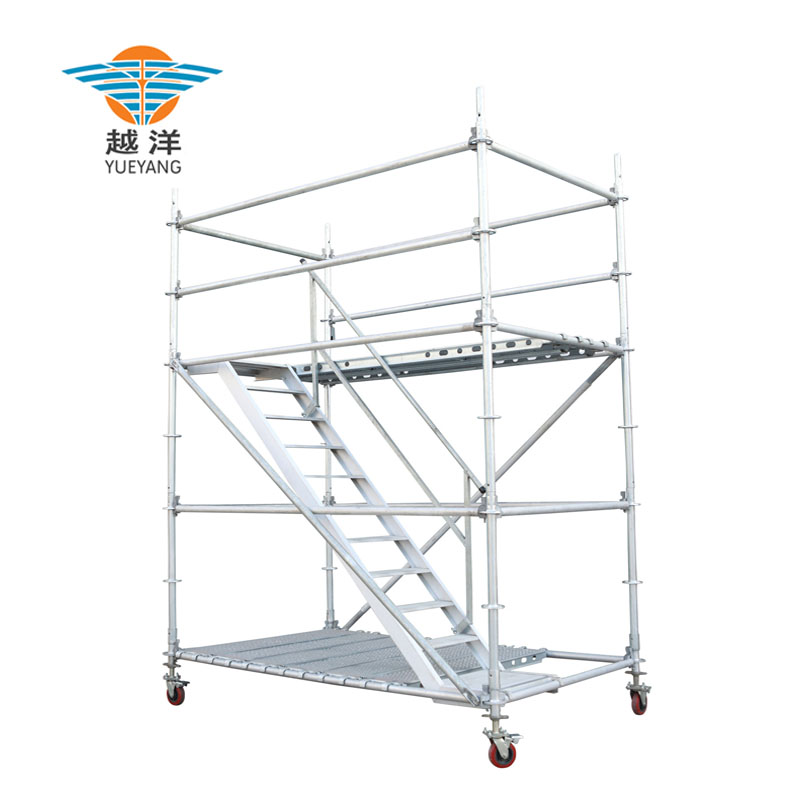
The system supports a full range of fall protection accessories. Optional guardrails create a continuous barrier along the platform edge. Toe boards stop tools and materials from sliding off the deck. Base jacks adjust for uneven ground and keep the structure level. These components integrate directly with the rosette nodes, so crews add them without custom fittings.
Inspection routines differ between the two systems. Ringlock connections are visually verifiable. A supervisor can confirm each wedge pin is seated with a quick glance. Tube and coupler joints require torque wrench checks to confirm proper clamp tightness. That step adds time to every inspection cycle.
Training demands also vary. Ringlock scaffolding meets common international scaffolding standards and accepts tube-and-fitting attachments, stair units, and safety gates. New workers learn the wedge-lock action in a short session. Tube and coupler systems require extensive training on coupler selection, spacing judgment, and torque control.
Which System Reduces Human Error
Human error poses the greatest risk on any scaffold project. Ringlock reduces that risk through its design. The rosette spacing sets the geometry automatically. Workers cannot misjudge ledger height or brace angle because the connection points are fixed. The wedge pin either seats or it does not. There is no middle ground.
Tube and coupler scaffolding leaves more decisions to the worker. Each coupler must be positioned and tightened by hand. Under-tightening allows braces to loosen. Over-tightening damages threads. Heavy oil or corrosion on tube surfaces lowers slip resistance even when torque is correct. These variables make structural safety dependent on individual skill and attention.
Modular systems shift safety from worker judgment to engineered connections. That shift reduces the chance of a missed clamp or a loose brace. For projects with tight schedules and mixed-skill crews, the positive locking design provides a measurable safety advantage.
Quick Comparison Table: Ringlock Scaffolding vs Tube and Coupler
The table below condenses the full analysis into five decision areas. Each row draws from the evidence presented earlier. Readers can scan quickly to identify the system that fits their project profile. The comparison serves as a starting point for procurement conversations. It does not replace engineering judgment.
Feature-by-Feature Comparison
Feature | Ringlock | Tube and Coupler |
|---|---|---|
Assembly Speed | Install runs 30%–50% faster. Ledger heads drop into rosette nodes with a hammer strike. | Slow. Workers place each tube and tighten each coupler by hand. |
Load Capacity | Node connections deliver more than 15% higher load capacity. Ratings reach higher kN/m² levels. | Strength depends on coupler torque. Correct torque around 50 Nm prevents connection failure. |
Versatility | Fixed rosette spacing suits straight runs, towers, and curved facades. | Any-point clamping adapts to irregular shapes, pipes, and confined areas. |
Cost | Higher upfront component price. Lower labor costs create long-term savings. | Lower component price. High labor costs raise total expenses. |
Safety | Positive wedge-lock prevents accidental dislodging. Connections allow quick visual inspection. | Safety depends on clamp tightness and worker judgment. |
The pattern is clear. The modular system wins on speed, strength, and safety. Tube and coupler wins on geometry freedom. The correct choice flows from project shape and schedule.
Speed differences change crew planning directly. A ringlock crew measures less and hammers more. A tube and coupler crew measures constantly at each lift. Repetitive floors multiply the speed gap. Irregular structures narrow it.
Best-Fit Project Scenarios
Project type should dictate the selection. The table below maps common scenarios to the right system.
Project Scenario | Recommended System | Supporting Evidence |
|---|---|---|
Large commercial construction, industrial maintenance, infrastructure projects | Ringlock | Pre-determined rosette points eliminate manual joint measurement and leveling. Faster installation cuts labor costs. |
Small-scale renovation with irregular geometries | Tube and Clamp | Clamps position at any point along a pipe. Solutions fit irregular shapes, confined areas, and historic buildings. |
Piping systems, curved designs, uneven ground | Tube and Clamp, with Ringlock hybrid sections | Tube and Clamp excels with irregular geometry. Ringlock needs hybrid sections to clear obstacles. |
Heavy-duty masonry, industrial maintenance, large-scale shoring | Ringlock | Fixed wedge-lock geometry distributes load evenly. Strict tolerances deliver excellent structural support. |
Large commercial projects carry high labor expenses. The efficiency gains of the modular design yield a superior return on investment. Higher load capacity supports refineries and power plants. Fixed rosette points remove measuring tasks from the crew.
Irregular structures require flexibility. Tube and clamp adapts where fixed bays leave gaps. Clamps position anywhere along a pipe. This freedom suits confined areas and historic buildings. The trade-off remains labor-intensive and slow.
Some projects mix both needs. Occasional obstacles interrupt an otherwise regular layout. Crews add tube-and-clamp hybrid sections to bridge short distances. This combination preserves speed without sacrificing adaptability.
Very low labor cost regions change the math. Cheaper labor makes the lower component price of tube and clamp attractive. Specialized geometry can justify the slower process. Each project demands an individual assessment.
Consult a scaffolding supplier when the decision stays unclear. Provide the building layout and access requirements. The supplier can balance modular speed against clamp flexibility.
Ringlock scaffolding wins on speed, consistency, load capacity, and labor savings. Tube and coupler wins on flexibility for complex or irregular structures. Choose Ringlock for large, repetitive, schedule-driven projects. Choose tube and coupler for custom, low-volume, or geometrically complex work.
Weigh your project scale, timeline, labor skill, and budget before you decide. Every site presents a different set of demands. A modular system accelerates uniform layouts. A clamp system adapts to obstacles. The trade-off is clear. No single system fits every project. Consult a scaffolding supplier for project-specific advice. They can balance modular efficiency against clamp flexibility for your exact conditions.
FAQ
Which system costs less to own over a full project cycle?
Ringlock carries a higher upfront component price. Labor savings from faster assembly offset that gap on large projects. Tube and coupler costs less to buy but demands more man-hours. Total cost depends on project scale, labor rates, and schedule pressure.
Can ringlock scaffolding handle curved or irregular structures?
Ringlock works on curved facades and towers. Fixed rosette spacing limits adaptation around offset pipes or protruding beams. Crews add tube-and-fitting attachments to bridge short gaps. Large irregular zones still favor tube and coupler for full geometric freedom.
What torque is required for tube and coupler connections?
Standard safety protocols require tightening scaffolding coupler nuts to approximately 50 Nm. A properly tightened coupler achieves a slip resistance safe working load of 9.1 kN and a tension safe working load of 15.0 kN. Incorrect torque directly affects structural safety.
How does ringlock reduce worker error on site?
The rosette spacing sets the geometry automatically. Workers cannot misjudge ledger height or brace angle. The wedge pin either seats or it does not. This positive locking design shifts safety from individual judgment to engineered connections.
Do both systems meet international scaffolding standards?
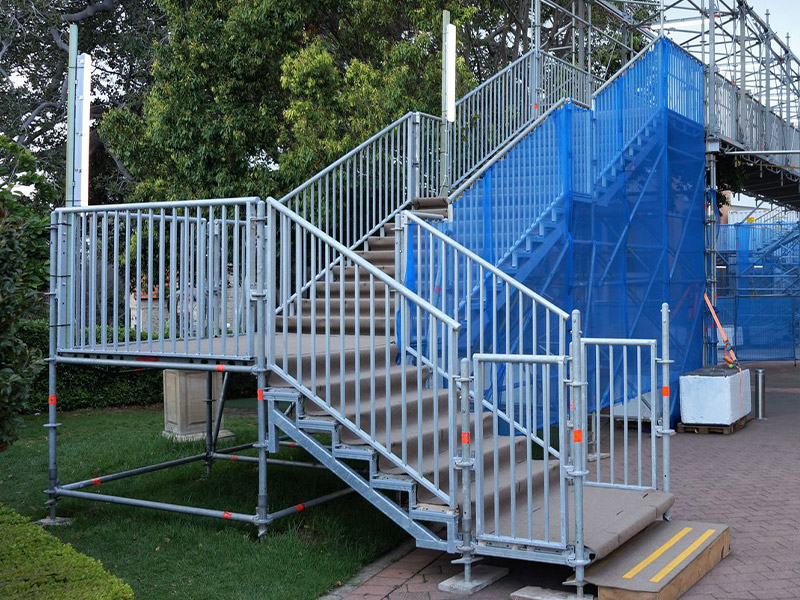
Ringlock meets common international scaffolding standards. It accepts tube-and-fitting attachments, stair units, and safety gates. Tube and coupler systems also comply when crews follow proper torque and inspection protocols. Compliance depends on correct installation and regular inspection for both systems.