


 yueyang@yueyangcz.com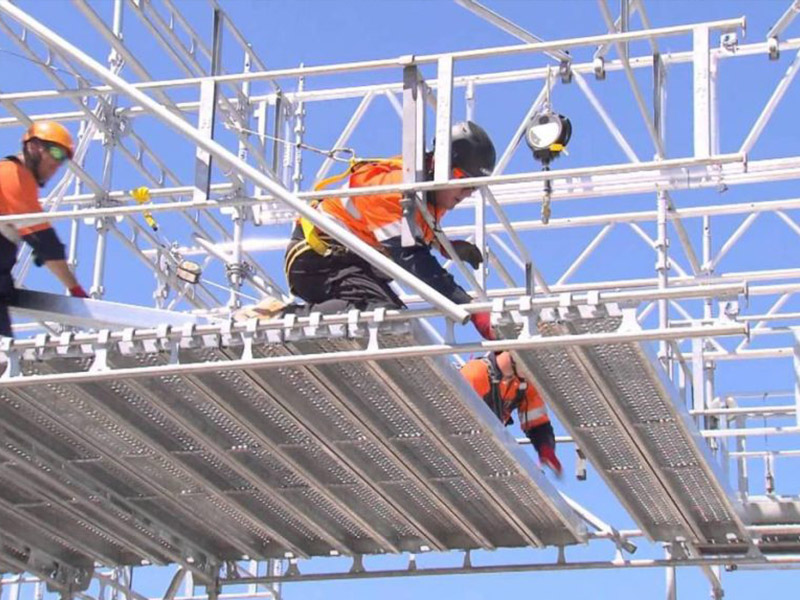
What are the 7 types of scaffolding
 May 25, 2026|
 View:653
You may wonder what the main types of scaffolding are. Here are the seven you will often see:
Tube & Coupler
Suspended Scaffolding
Cantilever Scaffolding
Steel Scaffolding
Yueyang stands out as a trusted supplier for all types of scaffolding. You get access to high-quality systems, expert advice, and a wide product range for any project.
Key Takeaways
Understand the seven types of scaffolding: Tube & Coupler, System, Frame, Suspended, Cantilever, Trestle, and Steel. Each type serves specific project needs.
Choose Tube & Coupler scaffolding for complex designs and uneven surfaces. Its flexibility allows for safe construction around obstacles.
System scaffolding offers quick assembly with prefabricated parts. It enhances safety with guardrails and stable platforms, making it ideal for large projects.
Frame scaffolding is cost-effective and easy to set up. It works best for low to medium-height jobs, providing a reliable platform for various tasks.
Always prioritize safety by inspecting scaffolding before use. Proper setup and adherence to safety protocols prevent accidents and ensure worker security.
Tube & Coupler
Definition
Tube and coupler scaffolding is one of the most flexible types of scaffolding you can use. This system uses steel tubes and special connectors called couplers. You join the tubes together with right angle, swivel, or sleeve couplers. The tubes usually have a diameter of 48.3 mm and a wall thickness of 4 mm. High-strength steel gives the structure the ability to handle heavy loads. You can connect the tubes at almost any angle, which helps you build scaffolding around complex shapes or on uneven ground.
Tip: If you need to work on a building with an unusual design, tube and coupler scaffolding gives you the flexibility to create a safe platform.
Features
You will notice several features that make tube and coupler scaffolding stand out from other types of scaffolding. The table below shows some key differences:
Feature | Tube and Coupler Scaffolding | Frame Scaffolding |
|---|---|---|
Connection Flexibility | Tubes can be joined at any angle for complex shapes | Fixed frames limit connection angles |
Load Capacity | High strength, resists tension and compression | Supports uniform loads of 2 to 4 kN |
Material | High-strength steel tubes | Lighter materials |
Components | Couplers, base plates, braces | Mainly frames |
You can adjust the structure to fit almost any project. The strong steel tubes and couplers give you a safe and stable platform, even for heavy-duty work.
Need Custom Scaffolding & Construction Equipment Solutions For Your Projects?
Changzhou Yueyang Machinery specializes in full-rangeRinglock Scaffolding, Frame Scaffolding, Formwork, Safety Barrier & Accessorysystems for construction, stage event, mining and heavy industry. ISO 9001 certified, comply with EU EN & Australia AS/NZ safety standards. Factory direct one-stop service from drawing customization to full container delivery.
Uses
You will often choose tube and coupler scaffolding for projects with complex designs or uneven surfaces. This system works well when you need to build around odd shapes, corners, or obstacles. Construction teams use it for bridges, towers, and buildings with unique architecture. You can also use it on sloped or rough ground where other types of scaffolding may not fit. The flexibility and strength make it a top choice for challenging jobs.
System Scaffolding
Definition
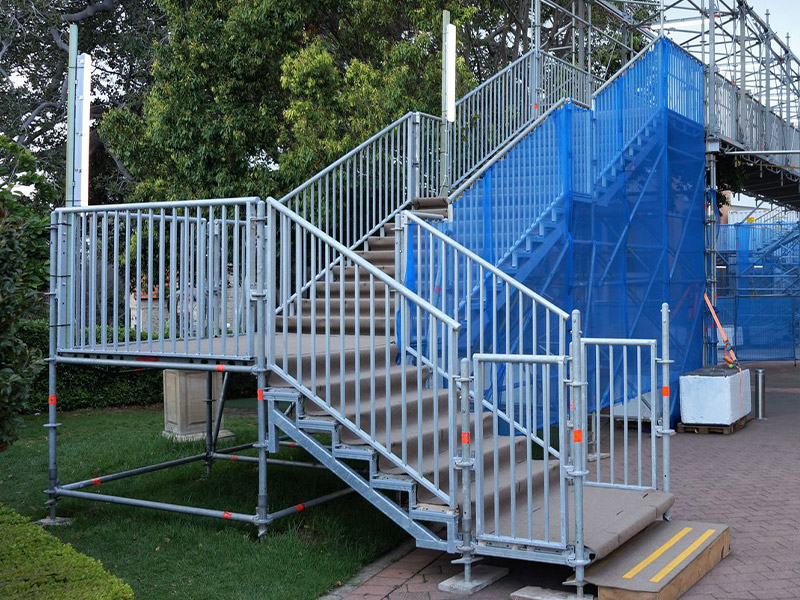
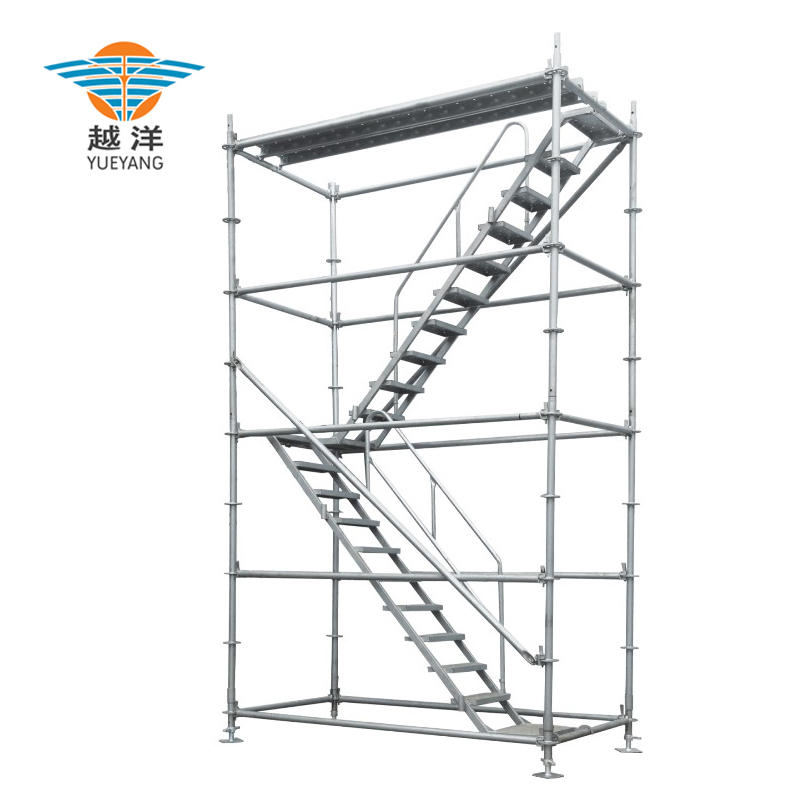
System scaffolding uses prefabricated components that fit together quickly and securely. You will find this type in many modern construction projects. Examples include Ringlock, Cuplock, and Kwikstage scaffolding systems. Yueyang offers all these options in their product range. Each system uses a set of main parts that make assembly simple and safe. The table below shows the main components you will use:
Component | Description |
|---|---|
Standards | Vertical components that provide the main support structure. |
Ledgers | Horizontal components that connect standards and provide stability. |
Transoms | Horizontal members that support the platform and distribute loads. |
Couplers | Connectors that join different scaffolding components together. |
Braces | Diagonal supports that enhance the rigidity and stability of the structure. |
Features
You will notice several features that make system scaffolding popular for versatility and safety. The prefabricated parts lock together without tools, which saves time and reduces errors. Guardrails and toe boards protect workers from falls and dropped tools. Access ladders help you reach higher levels safely. Stable platforms give you secure footing. The table below highlights how these features contribute to safety and efficiency:
Feature | Contribution to Safety and Efficiency |
|---|---|
Guardrails | Prevent falls by providing a physical barrier. |
Access ladders | Ensure safe and easy access to elevated work areas. |
Stable platforms | Offer secure footing, reducing the risk of slips and falls. |
Material handling | Supports heavy equipment and materials, enhancing workflow efficiency. |
Project flexibility | Allows quick adjustments as work areas change, improving adaptability. |
Falls are the leading cause of death in construction. Over 420 workers lost their lives from falls in a recent year. System scaffolding helps reduce these risks with built-in safety features.
Uses
You can use system scaffolding for many types of scaffolding projects. It works well for building facades, bridges, and industrial sites. You will see Ringlock and Cuplock systems in large commercial jobs. Kwikstage is common for residential and event setups. System scaffolding adapts to changing work areas and supports heavy loads. You can build tall structures or work on complex shapes with ease. Many construction teams choose system scaffolding because it offers speed, safety, and flexibility.
Frame Scaffolding
Definition
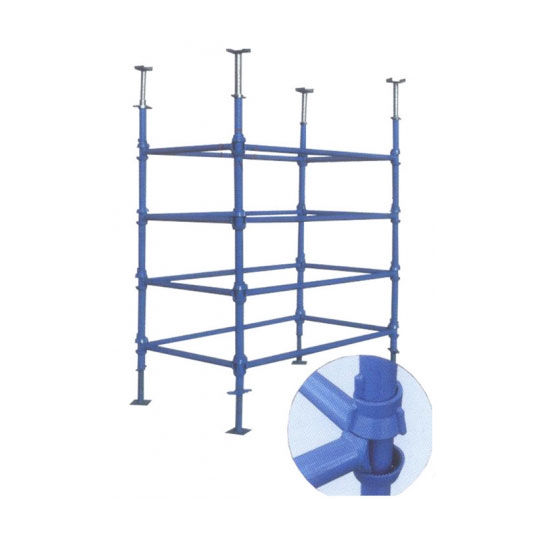
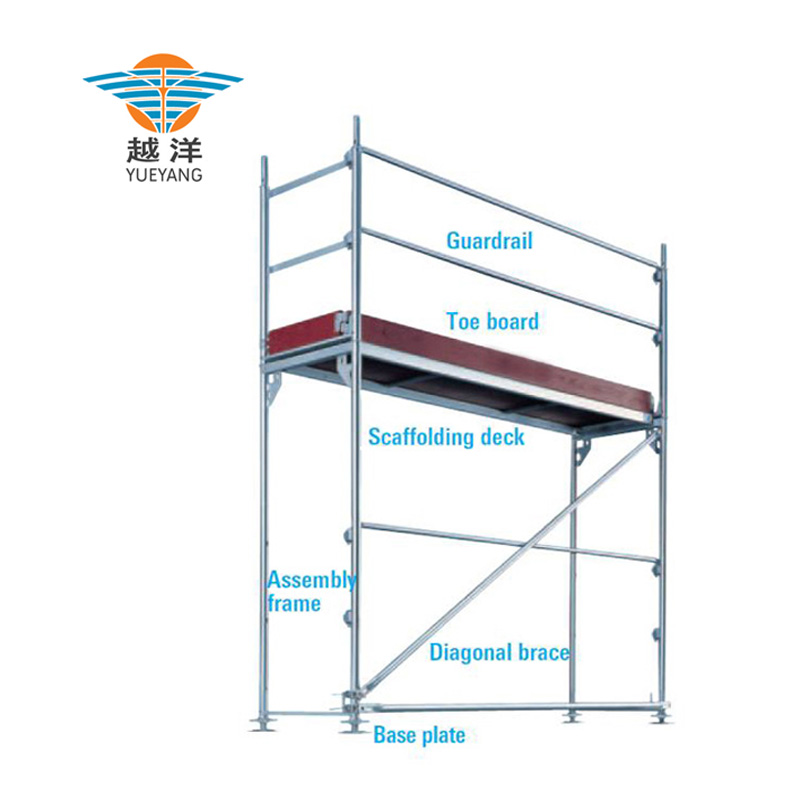
Frame scaffolding uses prefabricated frames as the main support structure. You will see these frames connected with cross braces to keep everything stable. Platforms give you a safe place to stand and work. The base support includes plates and mud sills that help the scaffolding stay steady on the ground. The table below shows the key elements of frame scaffolding:
Key Element | Description |
|---|---|
Prefabricated Frames | Provide the main structural support. |
Cross Bracing | Maintains stability and prevents movement. |
Platforms | Offer a safe working surface for workers. |
Base Support | Includes base plates and mud sills for a stable foundation. |
You can assemble frame scaffolding quickly because the parts fit together easily. This makes it a popular choice for many construction projects.
Features
Frame scaffolding stands out for its simple design and easy use. You can set it up and take it down without much effort. Here are some features you will notice:
Ease of Use: You can erect and dismantle frame scaffolding quickly, which saves time.
Cost-Effective: The simple parts keep costs low.
Lightweight: Aluminum frames make it easy to move and handle.
Modular: Standard sizes help you plan and manage materials.
Limited Height and Load Capacity: Best for low to mid-height jobs.
Less Flexible: Works best for straight lines, not curves or complex shapes.
Joint Durability: Clamps or pins may loosen, so you need to check them often.
Tip: If you want a fast and affordable solution for a small building or repair job, frame scaffolding is a smart choice.
Uses
You will find frame scaffolding in many types of construction and maintenance work. The table below shows where you can use it and why it works well:
Application Type | Advantages |
|---|---|
Facade Work, Painting, Cladding | Long, continuous platforms for exterior work. |
Masonry and Bricklaying | Unobstructed areas and support for heavy materials. |
Public Works, General Maintenance | Safe and efficient for routine building work. |
Interior High-Ceiling Access | Easy access to high spaces indoors. |
Stucco and Plastering | Stable platforms for plastering tasks. |
Efficiency and Speed | Quick setup and removal save time and money. |
Versatility | Fits many construction and maintenance needs. |
Economy | Low initial cost and good return on investment. |
Transportability and Storage | Easy to stack and move for large projects. |
You can rely on frame scaffolding for jobs that need speed, safety, and cost savings. It helps you finish projects on time and within budget.
Suspended Scaffolding
Definition
Suspended scaffolding gives you access to areas that are hard to reach, especially on tall buildings. You will see these platforms hanging from ropes or wires attached to an overhead structure. Workers use suspended scaffolds to move up and down the sides of buildings. You can find two main types: baskets and boatswain’s chairs. Another common type is the two-point adjustable suspension scaffold, also called a swing-stage scaffold. This platform hangs from ropes or cables connected to stirrups at each end. You can raise or lower the platform to reach different work locations.
Suspended scaffolds are supported by ropes or wires connected to an overhead structure.
They help you access the sides of tall buildings.
Main types include baskets, boatswain’s chairs, and swing-stage scaffolds.
Features
Suspended scaffolding offers several safety and accessibility features. You need a secure anchorage system to hold the weight of workers and equipment. Outrigger beams and counterweights keep the platform stable and prevent accidental movement. Scaffold platforms must support their own weight plus four times the maximum intended load. Tiebacks add extra safety by stopping rigging devices from shifting. You can assemble suspended scaffolding quickly, and it is lightweight. Motorized hoist systems allow you to move personnel and materials smoothly. You can customize these systems for different jobs.
Anchorage and support systems ensure stability and safety.
Outrigger beams with counterweights prevent displacement.
Platforms support heavy loads and stay stable in bad weather.
Tiebacks provide extra protection in emergencies.
Lightweight and easy to assemble.
Customizable for specific job requirements.
Motorized hoists improve workflow efficiency.
Uses
You will often use suspended scaffolding for window cleaning and exterior repairs on tall buildings. This system works well for high-rise and façade projects because it lets you reach elevated areas safely. Many workers rely on suspended scaffolding for painting, maintenance, and installation tasks. Safety measures and training programs play a big role in preventing accidents. For example, a project in Nigeria showed that proper anchoring to a certified fall arrest system can prevent serious injuries during falls. You should always follow safety protocols when using suspended scaffolding.
Window cleaning on tall buildings
Exterior repairs and maintenance
Painting and façade work
Installation of signs or panels
Access to high-rise structures
Tip: Always check the anchorage and support systems before starting work. Safety training helps you avoid accidents and keeps your team secure.
Cantilever Scaffolding
Definition
Cantilever scaffolding is a special type of scaffolding that you support from one side only. You fix it into the building or structure, and it does not touch the ground below. This design helps you work in places where you cannot set up scaffolding on the ground. You will find it useful when space is tight or blocked by obstacles.
Note: You can use cantilever scaffolding when the ground below is busy, uneven, or unsafe for regular scaffolding.
Features
You will notice several features that make cantilever scaffolding different from other types. The main support comes from strong needles or beams that stick out from the building. These needles hold the weight of the platform and workers. You do not need ground support, so you can keep the area below clear for people, cars, or machines. You must make sure the structure is strong and secure because all the weight sits on one side.
Key features include:
Support from one side only
Needles or beams fixed into the building
No ground contact under the platform
Safe and stable when designed and installed correctly
Allows work above busy or blocked areas
You should always check the building’s strength before you install cantilever scaffolding. Safety comes first.
Uses
You will choose cantilever scaffolding for special jobs where regular scaffolding will not work. It is common in high-rise construction, bridge repairs, and work above busy roads, railway lines, or rivers. The table below shows where you can use cantilever scaffolding and why it helps:
Use Cases | Advantages |
|---|---|
High-rise construction | Frees up ground space for traffic or operations. |
Bridge repairs | Ideal for work at height without ground interference. |
Areas above busy roads, railway lines, rivers | Provides a stable and safe platform when designed properly. |
If you need to repair a building on a narrow street, cantilever scaffolding lets you work without blocking traffic.
You can use it for façade renovation in crowded city areas.
It helps you reach places where the ground is not safe or available.
Tip: Always ask a professional to design and check cantilever scaffolding. This keeps you and your team safe while you work.
Trestle Scaffolding
Definition
You use trestle scaffolding for indoor work and small projects. This type of scaffolding stands on movable supports called trestles. You do not need to fix it to a wall or floor. Trestle scaffolding usually reaches heights up to 5 meters. You can set it up quickly and move it easily. Many people call it "portable scaffolding" because you can carry it from room to room. You often see trestle scaffolding in painting, repairs, and light construction jobs.
Tip: Trestle scaffolding works best for tasks where you need to move your platform often.
Features
Trestle scaffolding gives you several helpful features. You can assemble it without special tools. The supports fold up, so you can store them in a small space. You can adjust the height to fit your needs. The platform stays stable because the trestles have wide bases. You can add wheels to some models, which lets you roll the scaffolding across the floor. Safety rails protect you from falling. The table below shows key features:
Feature | Benefit |
|---|---|
Foldable supports | Easy storage and transport |
Adjustable height | Fits different job requirements |
Wide base | Stable platform |
Wheels (optional) | Simple movement |
Safety rails | Extra protection |
You can set up trestle scaffolding in minutes. You do not need a large team or heavy equipment.
Uses
You choose trestle scaffolding for jobs inside buildings. You can use it for painting ceilings, fixing lights, or installing decorations. Many workers use it in schools, offices, and homes. You can move the scaffolding to reach different spots. Trestle scaffolding helps you finish tasks faster because you do not waste time setting up. You can use it for:
Painting and plastering walls or ceilings
Electrical repairs and installations
Hanging signs or decorations
Cleaning high surfaces
If you need a safe and portable platform for indoor work, trestle scaffolding gives you a simple solution.
Steel Scaffolding
Definition
Steel scaffolding is an elevated temporary work platform designed to support you, your tools, and materials safely at height. This definition aligns with OSHA’s standards, which emphasize safety and stability for workers operating above ground. Steel scaffolding uses strong steel tubes and components to create a reliable structure that holds heavy loads and withstands tough conditions.
Features
Steel scaffolding offers several key features that make it stand out:
It provides unmatched strength and load-bearing capacity, allowing you to work on heavy-duty projects.
With proper maintenance, steel scaffolding can last 20 to 30 years or more, making it a long-term investment.
High-quality steel undergoes special alloying and heat treatment to resist fatigue and corrosion.
Galvanization, especially hot-dip galvanizing, coats the steel with zinc. This thick layer protects against rust and abrasion, keeping the scaffolding durable even in harsh environments.
The structure remains stable and strong, giving you confidence when working at height.
Uses
Steel scaffolding suits many demanding projects where strength and safety are critical. The table below shows its advantages and the best applications:
Advantages | Best Applications |
|---|---|
High load capacity | Tube and clamp scaffolding |
Strong and stable | High-rise construction |
Flexible in design | Projects needing heavy-duty capacity |
You will find steel scaffolding commonly used in high-rise buildings, bridges, and industrial sites. Its ability to handle heavy loads and resist wear makes it ideal for construction jobs that require both safety and durability. When your project demands a robust and long-lasting scaffold, steel scaffolding offers a reliable solution.
Tip: Choose steel scaffolding if your work involves heavy materials or harsh weather. Its strength and protection will keep your team safe and your project on track.
Types of Scaffolding Comparison
Key Differences
You will see that each type of scaffolding has unique features. The table below helps you compare the main differences:
Type | Main Feature | Flexibility | Load Capacity | Assembly Speed | Typical Height |
|---|---|---|---|---|---|
Tube & Coupler | Customizable connections | High | High | Moderate | Any |
System Scaffolding | Prefabricated parts | High | High | Fast | Any |
Frame Scaffolding | Simple frames | Low | Moderate | Fast | Low-Medium |
Suspended Scaffolding | Hanging platforms | Moderate | Moderate | Fast | High |
Cantilever Scaffolding | Supported from one side | Moderate | Moderate | Moderate | High |
Trestle Scaffolding | Movable trestles | Low | Low | Fast | Low |
Steel Scaffolding | Strong steel tubes | High | Very High | Moderate | Any |
You can choose the right system by looking at flexibility, load capacity, and how quickly you need to set up the scaffold.
Best Uses
You will find that different types of scaffolding work best for specific tasks. Here are some common applications:
Tube & Coupler: Great for complex shapes and uneven surfaces. You can use it for bridges, towers, and unique architecture.
System Scaffolding: Works well for building facades, industrial sites, and large commercial projects. You get speed and safety.
Frame Scaffolding: Best for facade work, painting, and masonry. You can use it for low to medium-height jobs.
Suspended Scaffolding: Ideal for window cleaning and repairs on tall buildings. You can raise or lower the platform as needed.
Cantilever Scaffolding: Useful when the ground is blocked or unsafe. You can work above busy roads or rivers.
Trestle Scaffolding: Perfect for indoor painting, light repairs, and tasks that need mobility. You do not reach extreme heights.
Steel Scaffolding: Suits heavy-duty construction, high-rise buildings, and projects needing strong safety features.
Yueyang offers all major types of scaffolding. You can find tailored solutions for construction, maintenance, and event setups. The product range covers everything from Ringlock and Cuplock systems to frame and suspended scaffolding. You get expert advice and reliable systems for any project.
If you need help choosing the right scaffold, Yueyang’s team can guide you based on your project needs.
You have learned about the seven main types of scaffolding and how each one fits different project needs. To choose the right system, you should:
Check your project’s size, timeline, and complexity.
Make sure the scaffold can handle the weight you need.
Look at the site’s ground and any obstacles.
Think about how long you will use the scaffold and if you need to move it.
Always follow safety rules and inspect your setup often.
For large or complex jobs, talk to experts like Yueyang. Their team can help you pick the safest and most efficient scaffolding for your project.
FAQ
What is the safest type of scaffolding for beginners?
You should use frame scaffolding if you are new to scaffolding. It is easy to set up and take down. The design helps you stay safe while you work on small or medium projects.
How do I choose the right scaffolding for my project?
First, look at your project’s height and weight needs. Next, check the ground and space around your site. You can ask experts at Yueyang for advice. They help you pick the best system for your job.
Can I use scaffolding indoors?
Yes, you can use trestle or frame scaffolding indoors. These types fit well in rooms and halls. You can move them easily and adjust their height for painting, repairs, or cleaning.
How often should I inspect my scaffolding?
You should inspect your scaffolding before each use. Look for loose parts, damage, or missing pieces. Regular checks keep you and your team safe.
Does Yueyang offer custom scaffolding solutions?
Yes! Yueyang provides tailored scaffolding systems for different projects. You can get expert help to match your needs, whether you work on construction, maintenance, or events.
Recommended Products
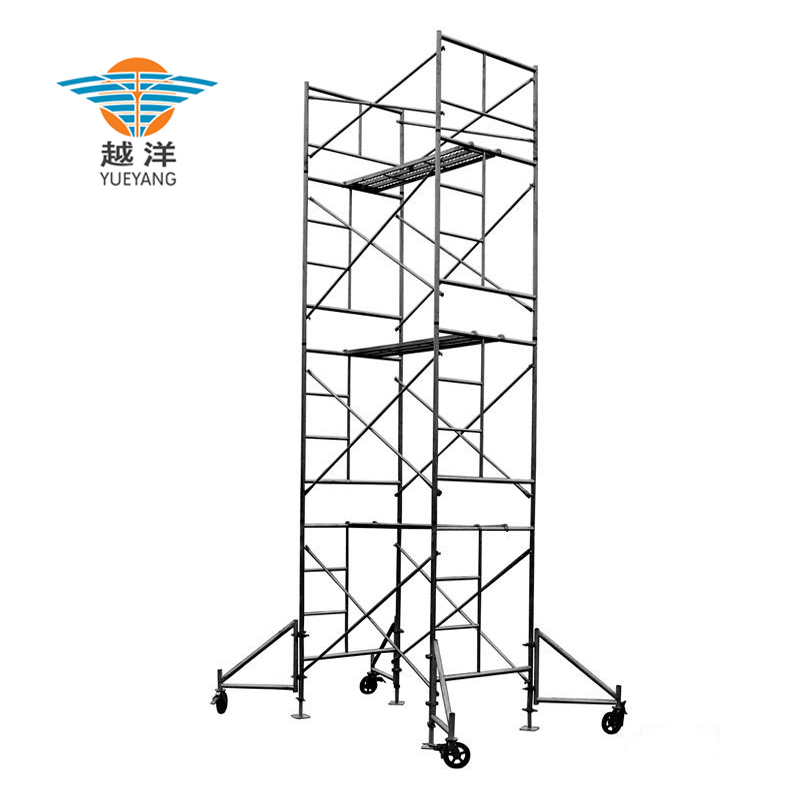
Steel Ladder Marson H Frame Scaffolding System For Builder
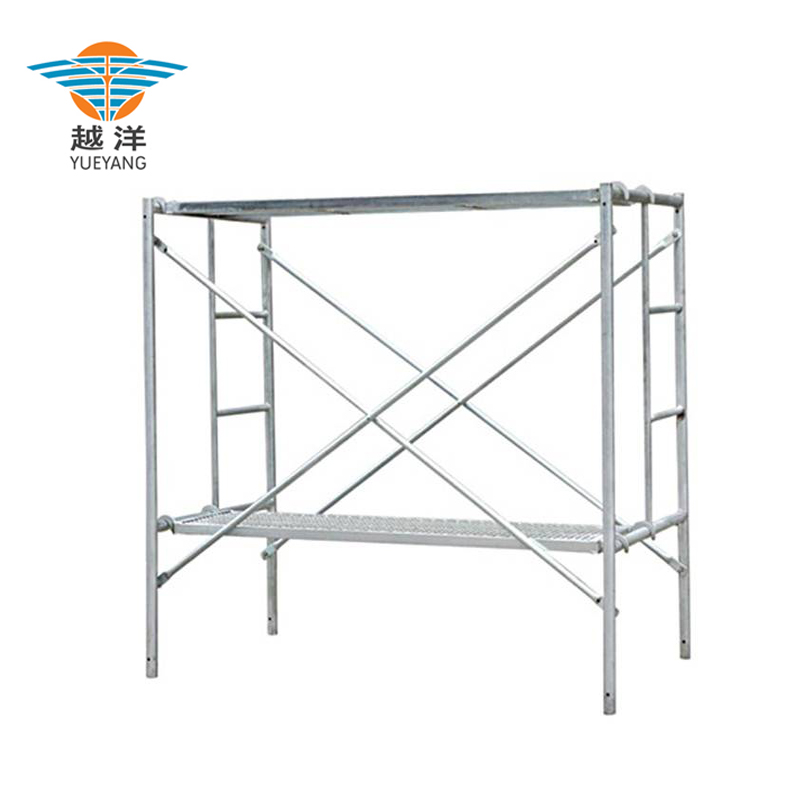
Marson H Frame Scaffolding System For Builder
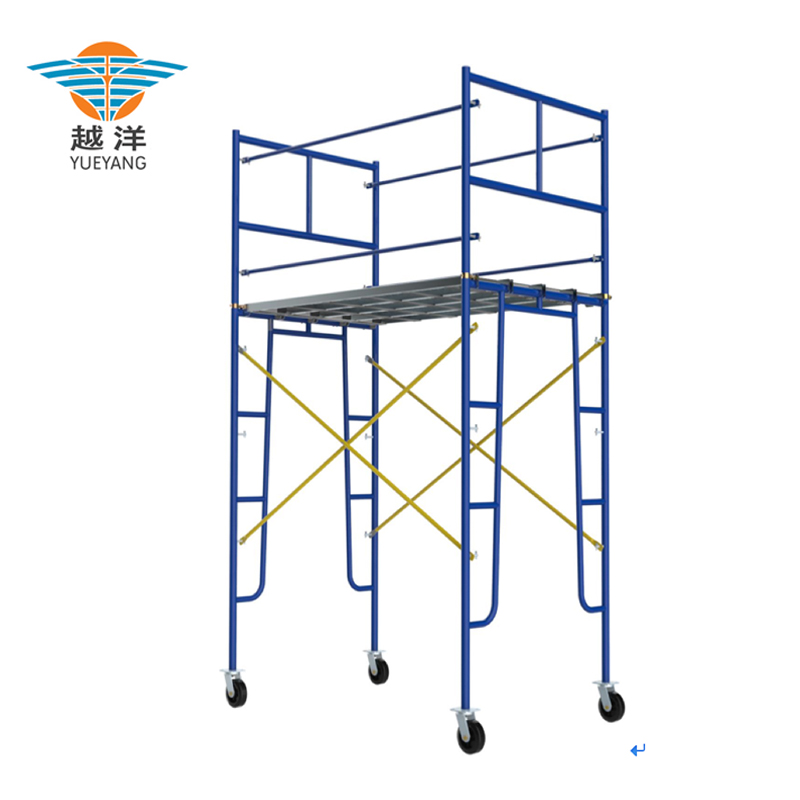
Steel Walk Through Space Frame Scaffolding System For Builder
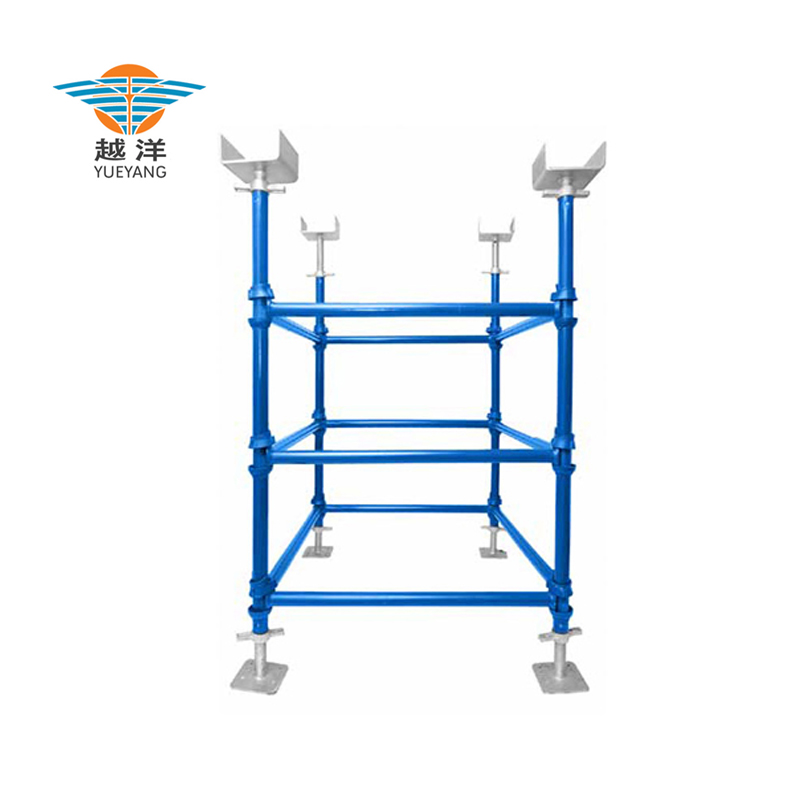
Galvanized Cuplock Scaffolding System For Concrete Slab Roof Formwork
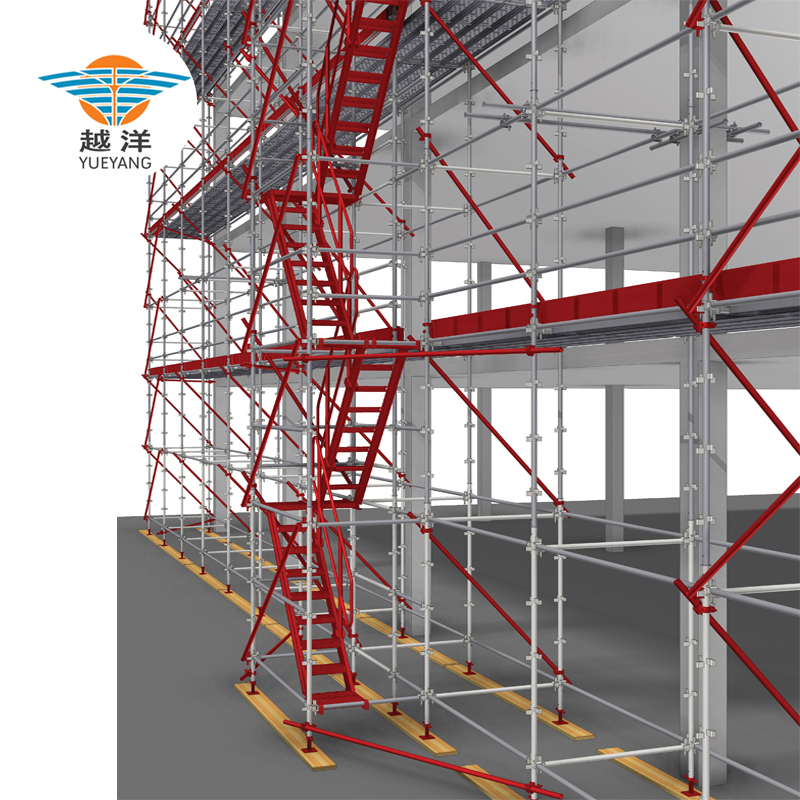
Factory Direct Galvanized Steel Kwikstage Scaffolding System Comply With Australian Standard For Building Work
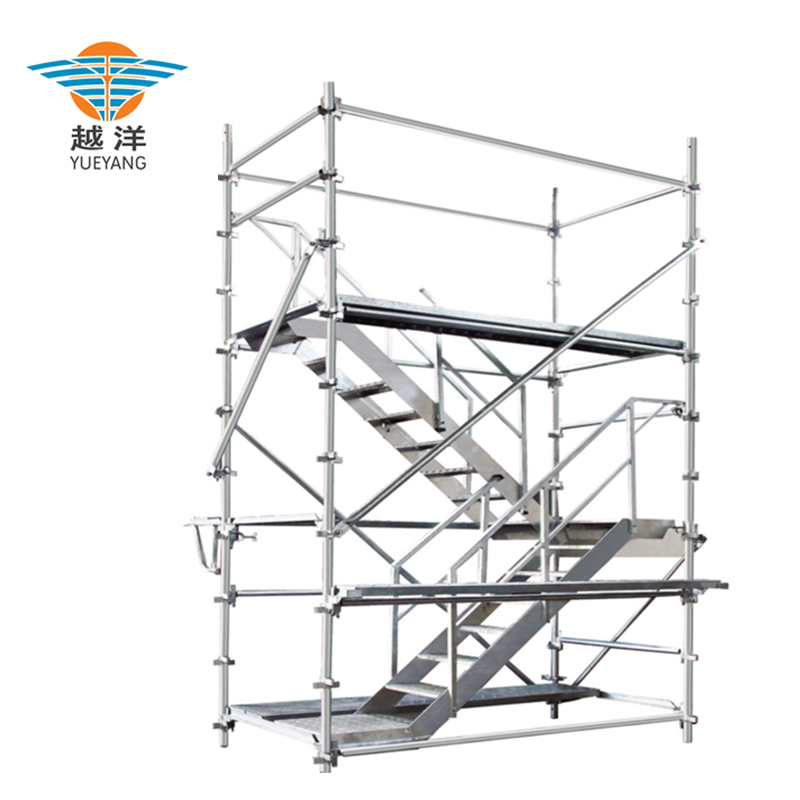
Aluminium Modular Kwikstage Scaffolding System For Building Work
Recent News
1.what is cuplock scaffolding system
2025-05-152.what are characteristics of scaffolding system
2024-10-243.what is ringlock scaffolding system
2024-09-044.Scaffolding System erection accuracy on the impact of building safety
2023-03-105.Construction requirements for Facade scaffolding systems
2023-02-14